
The Ultimate Grams to Tablespoons
Converter: Stop Guessing, Start Baking Like a Pro
Let’s be honest. There’s nothing more annoying than being halfway through making a cake, your hands are covered in flour, and suddenly the recipe asks for "50 grams of cocoa powder."
If you’re like most people, you probably just have a regular set of measuring spoons in your drawer, not a fancy digital kitchen scale. So, you guess. And usually, guessing the amount ends up ruining the recipe.
I’ve been there way too many times, which is exactly why we built a simple, highly accurate calculator that does the math for you.
👉 Don't want to read the math?
Click here to use our Free Grams to Tablespoons Converter Tool now! .
🔘 Go to the Free Grams to Tablespoons Converter →
The Big Myth: "Isn't 1 Tablespoon always 15 Grams?"
If you only take one thing away from this post, let it be this: Grams measure weight, and tablespoons measure space (volume).
A lot of websites will tell you to just multiply everything by 15. Please don't do that.
Think about it logically. If you fill a tablespoon with something heavy and dense, like honey or peanut butter, it’s going to weigh a lot. But if you fill that exact same tablespoon with light, fluffy powdered sugar, it’s barely going to weigh anything.
Our calculator above actually looks at the density of what you're measuring. Whether it’s flour, butter, or chocolate chips, it knows exactly how much space it takes up.
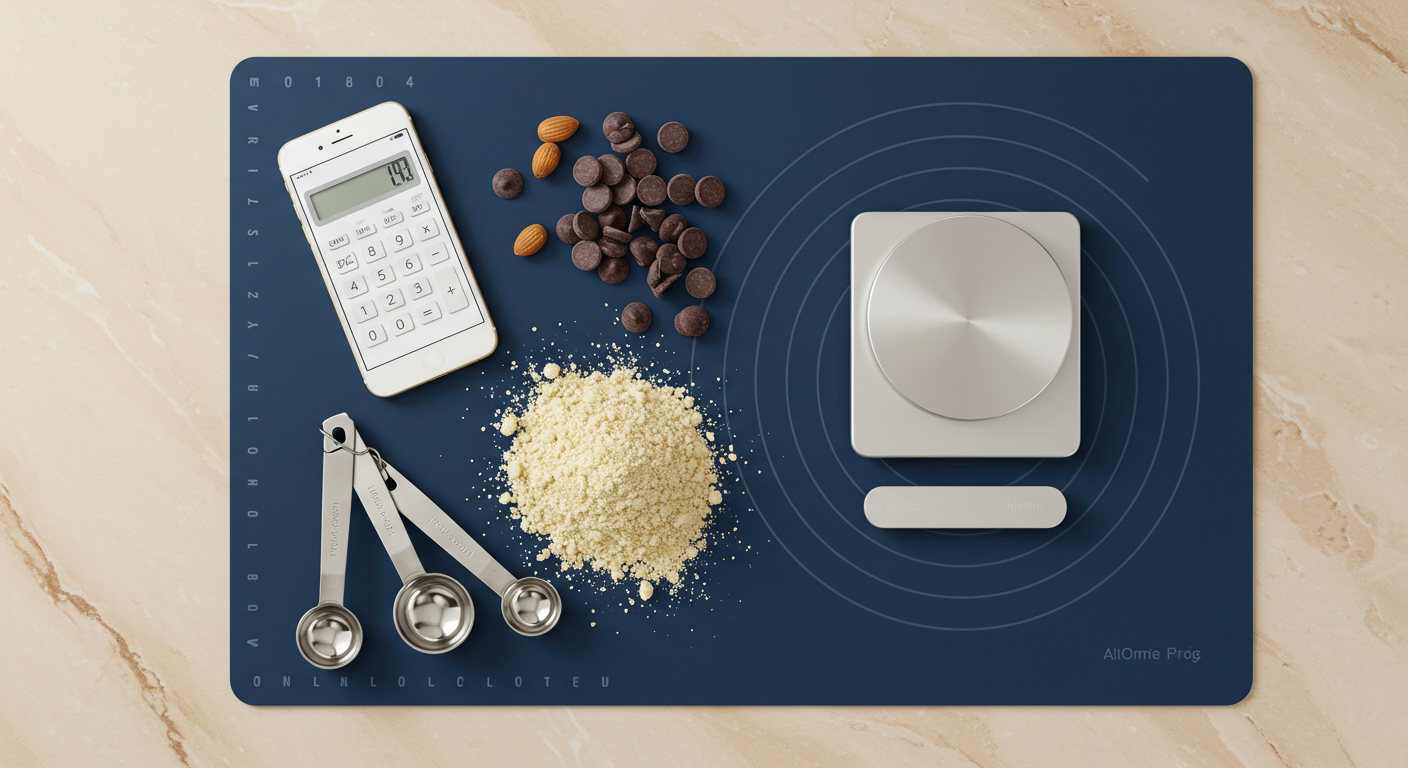
A Quick Cheat Sheet for Baking
If you're in a rush and don't want to use the calculator right now, here are the real conversions for the most common baking ingredients. (Note: This is based on a standard US Tablespoon).
🌾 All-Purpose Flour (Very light)
- 10 grams = ~ 1.3 Tablespoons
- 50 grams = ~ 6.4 Tablespoons
- 100 grams = ~ 12.8 Tablespoons
🍚 Granulated Sugar (Heavy and grainy)
- 12.5 grams = 1 Tablespoon
- 50 grams = 4 Tablespoons
- 100 grams = 8 Tablespoons
🧈 Butter (Solid and dense)
- 14.2 grams = 1 Tablespoon
- 50 grams = ~ 3.5 Tablespoons
- 100 grams = ~ 7 Tablespoons
Wait, Where Are You Baking? (Spoon Sizes Matter)
Here's something a lot of recipe blogs forget to mention: A tablespoon isn't the same size everywhere in the world.
If you’re reading an American recipe, they use a 14.79 mL spoon. If you’re in the UK or Asia, your spoon is probably exactly 15 mL. And if you're baking an Australian recipe, their tablespoons are giant—20 mL!
If you don't adjust for this, your recipe could easily flop. That’s why we added a little dropdown in our tool. Just tell it which standard you want to use, and it fixes the math instantly.
Oh, and We Added a Nutrition Tracker
Since the tool was already doing all this heavy lifting, we thought, why not make it show nutrition too?
If you’re counting calories, tracking macros, or just curious, the calculator will show you the exact protein, carbs, fats, and calories for whatever amount you type in. You can even click the "Compare" button to see the difference between, say, olive oil and butter, right next to each other.
A Few Quick Questions People Always Ask (FAQs)
Is 15 grams a tablespoon? Only if you are measuring water or milk! For dry ingredients like flour or cocoa powder, 15 grams is actually a lot more than one tablespoon.
How do I measure 50 grams of flour without a scale? Flour is light. 50 grams of it is about 6 and a half tablespoons. Tip: Don't pack the flour into the spoon tightly. Scoop it gently and level the top with the back of a butter knife.
Can I use this for liquids? Yes! The tool has a whole category for liquids like water, milk, cooking oils, and syrups.
Final Thoughts
Baking is supposed to be fun, not a math test. Next time you run into a weird measurement in a recipe, don't guess. Just open up this page, plug in the numbers, and get back to the fun part—eating what you baked.
Bookmark this tool for later, and happy baking!